© Light ZOOM Lumière, tous droits réservés.
— VINCENT LAGANIER —
July 1, 2026
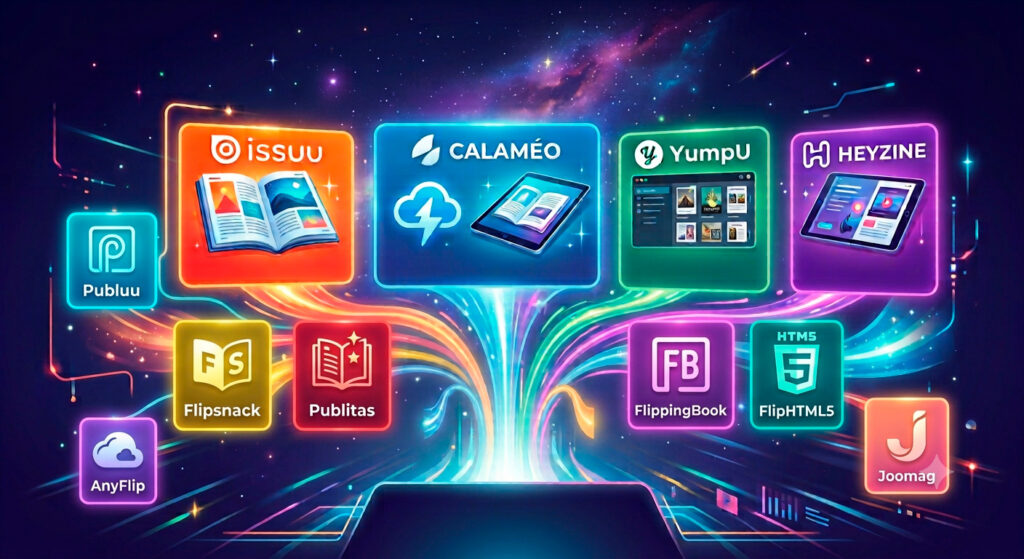
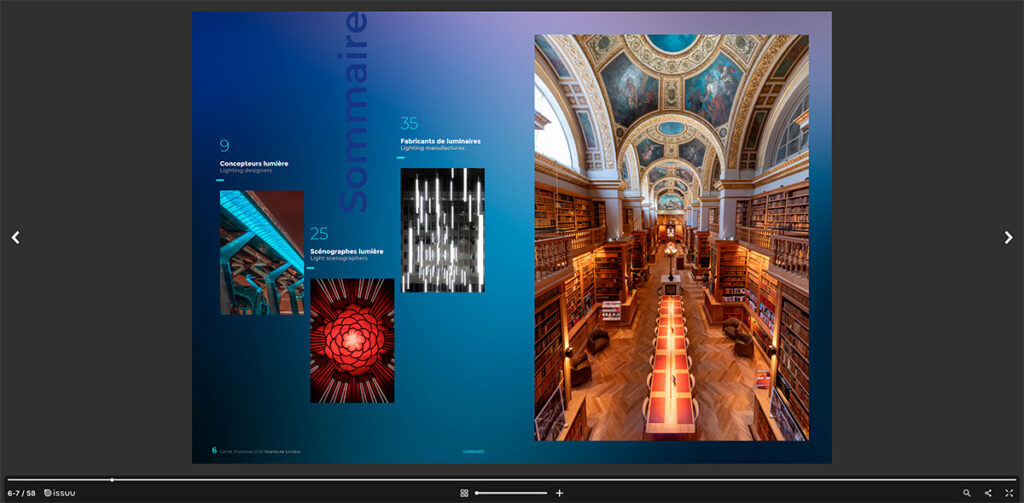
The top flipbook platforms for lighting brands in 2026 are Issuu, Calaméo, Flipsnack, Publitas, and FlippingBook. Each serves a different goal: Issuu for visibility, Calaméo for European B2B value, Flipsnack for design, Publitas for scalable commerce, and FlippingBook for secure corporate sharing.
Flipbooks still matter in lighting. But in 2026, visibility depends on SEO, GEO, and data control. Issuu, Calaméo, Flipsnack, Publitas: which platform really performs for professional marketers? A beautiful catalog is no longer enough. The winning flipbook must also be crawlable, quotable, and compliant.
Lighting marketing teams are under pressure from two directions at once. Sales teams still need visually rich digital catalogs, while IT teams now need those same documents to perform in both Google search and AI answer engines such as Perplexity, Gemini, and SearchGPT.
That is why flipbook platforms can no longer be judged on design alone. In professional lighting, the right platform must support:
The market now splits into four clear families: public kiosks, pure flipbook generators, e-commerce catalog tools, and corporate publishing platforms.
The table below synthesizes the major flipbook platforms most relevant to lighting marketing teams.
| Platform | Origin | Core positioning | Strengths | Weaknesses | Best fit for lighting |
| Issuu | US / EU governance | Public kiosk + flipbook | Huge domain authority, discovery, strong brand exposure | Public-first model, premium cost, US-linked data transfers | Brands seeking visibility and international reach |
| Calaméo | France | Document sharing + flipbook | Strong French/EU fit, good value, familiar in B2B publishing | Less global consumer reach than Issuu | European manufacturers, distributors, trade media |
| Yumpu | Switzerland | Magazine + SEO-focused publishing | Public discoverability, search-friendly footprint | Less modern brand perception, uneven use in lighting today | Legacy digital magazines, searchable public catalogs |
| Heyzine | Spain | HTML5 flipbook generator | Clean UX, light interface, simple embedding | Smaller ecosystem, less discovery power | Design-led embedded flipbooks on owned sites |
| Publuu | Poland | Interactive flipbook | Clean interface, business-friendly presentation | Smaller installed base, less authority | SMB catalogs, sales presentations |
| Flipsnack | US / Romania roots | Design studio + shoppable flipbook | Strong creation tools, templates, interactive design | Product management less scalable than retail-grade systems | Mid-sized product catalogs with visual storytelling |
| Publitas | Netherlands | Retail catalog commerce | Product feed integration, shopping workflows, enterprise retail logic | Higher cost, more complex onboarding | Large shoppable catalogs with product sync |
| FlippingBook | Malta | Corporate publishing | Clean HTML, private sharing options, strong business use | Less “marketplace visibility” | Sales enablement, secure B2B publishing |
| FlipHTML5 | Brazil / Hong Kong group | Publishing + ebook sales | Broad feature set, monetization tools | Data governance concerns for strict EU buyers | Low-cost experimentation, non-sensitive public content |
| Joomag | US | Content marketing + CRM | Marketing automation angle | Broader than flipbooks; not lighting-specific | Content-led campaigns and gated assets |
| AnyFlip | Hong Kong | Fast PDF conversion | Speed, ease of use | Governance and compliance concerns | Low-stakes, quick-turn public documents |

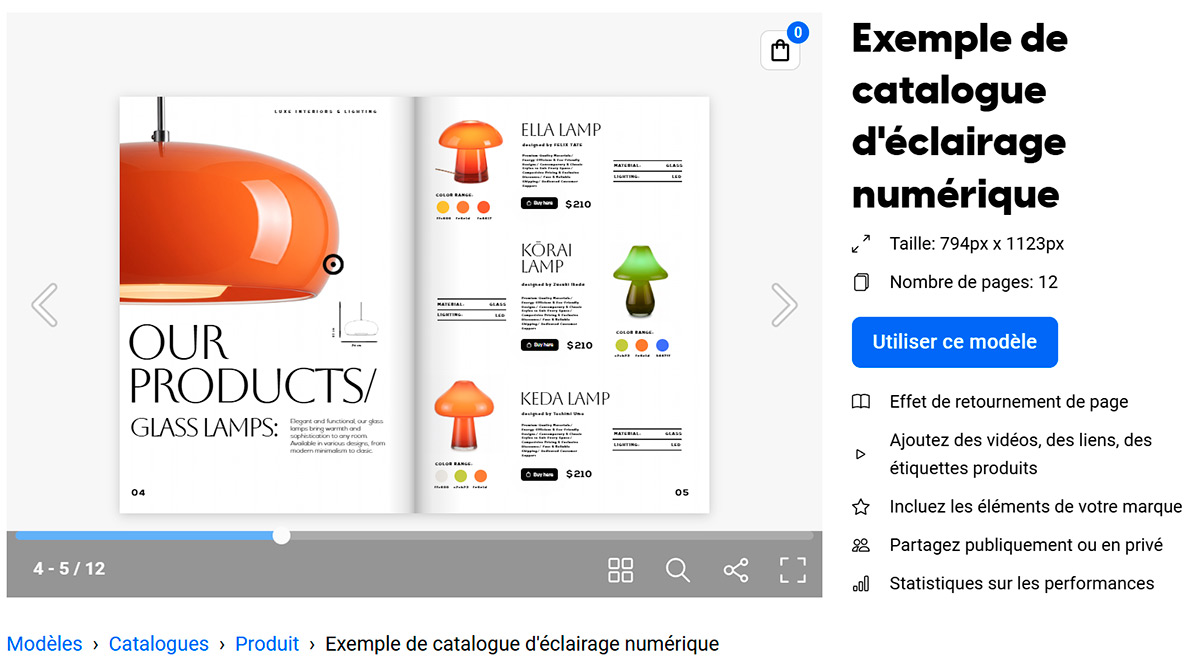
In lighting, design matters. Product families, beam spreads, optics, finishes, and project imagery all rely on layout quality. On this front, Flipsnack, Issuu, and Heyzine stand out.
The trade-off is clear: the most elegant reader experience does not automatically produce the best indexability, quote extraction, or product-level discoverability.
Lower cost often means lower visibility control.
For cost-sensitive teams, especially small manufacturers, lighting design agencies, and distributors, the strongest budget options are usually:
But there is a catch. “Free” often means one or more of the following:
For lighting firms with long buying cycles and premium brand positioning, cheap publishing can quickly become expensive if it introduces competitor ads, poor analytics, or weak conversion paths.
The strongest options are usually:
Retail catalogs and controlled B2B sharing are different jobs. Two categories deserve separate treatment.
This distinction matters because a specifier catalog, a distributor price list, and a shoppable online retail brochure do not share the same requirements.
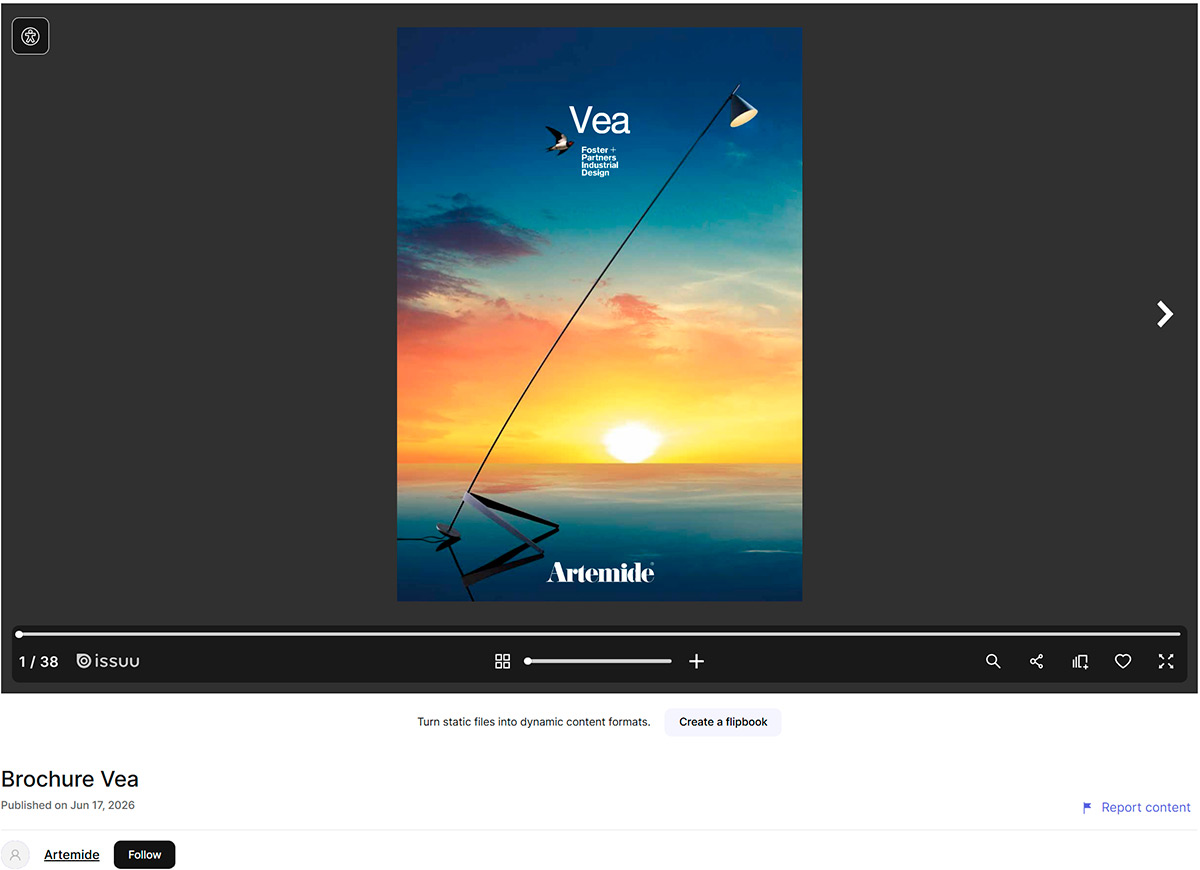
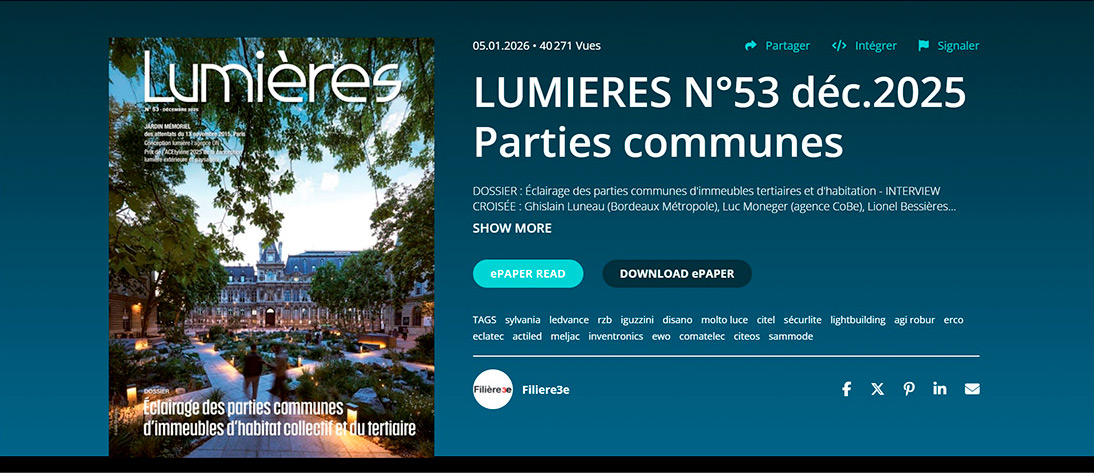
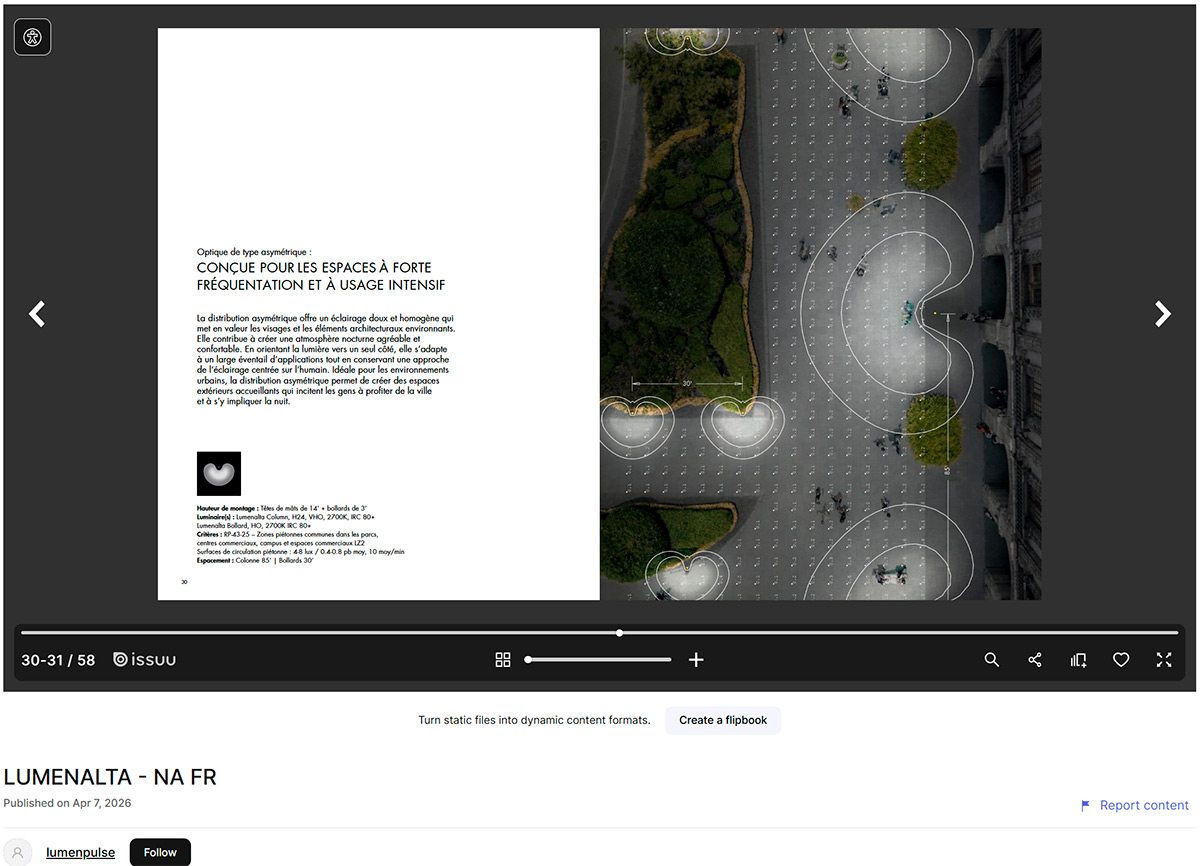
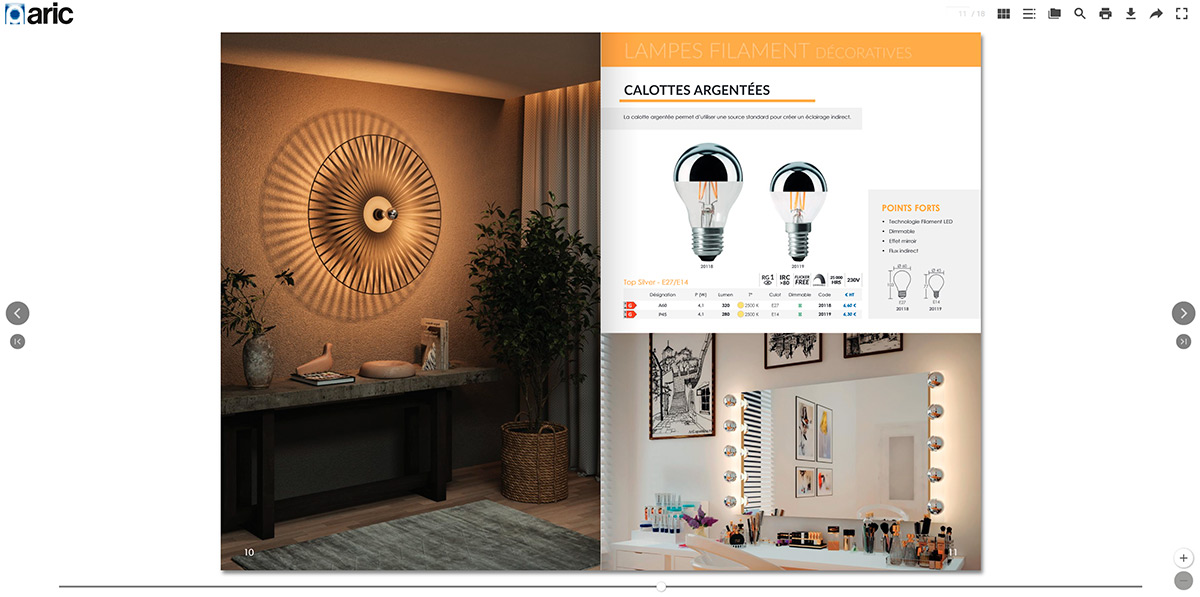
According to my lighting market analysis, Issuu, Calaméo, and Yumpu have been widely used in lighting and related trade media. Among the visible examples:
Media players’ choice depends on their size and scope such as:
A striking pattern emerges: some brands used public kiosks heavily in the 2012–2016 period, then reduced or abandoned them. That likely reflects a shift toward:
This is an editorially important point: adoption alone does not prove long-term effectiveness.
For lighting brands,
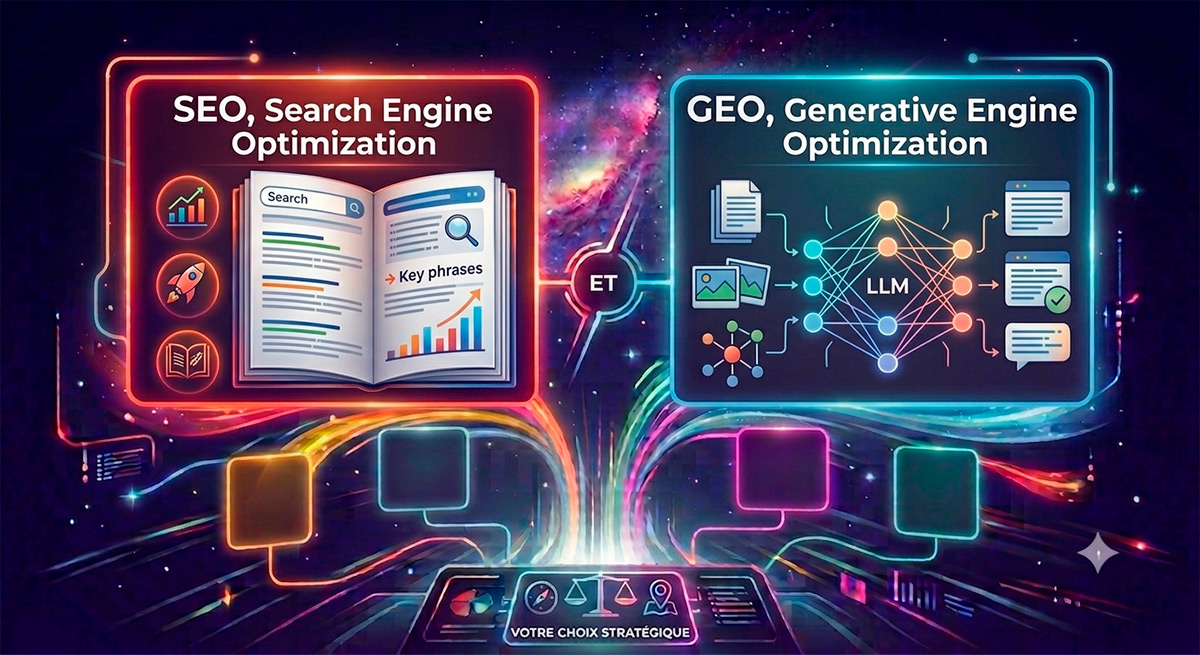
In 2026, flipbooks play a role in two parallel visibility systems. SEO is about indexing. GEO is about being quoted by AI. What’s the real situation?
Traditional SEO depends on:
A raw PDF can rank, but usually with poor context and limited extraction.
A well-built flipbook platform can turn a document into a more machine-readable asset.
GEO is different. AI systems are not just ranking pages; they are assembling answers. That means your content must be:
For lighting companies, this matters especially for:
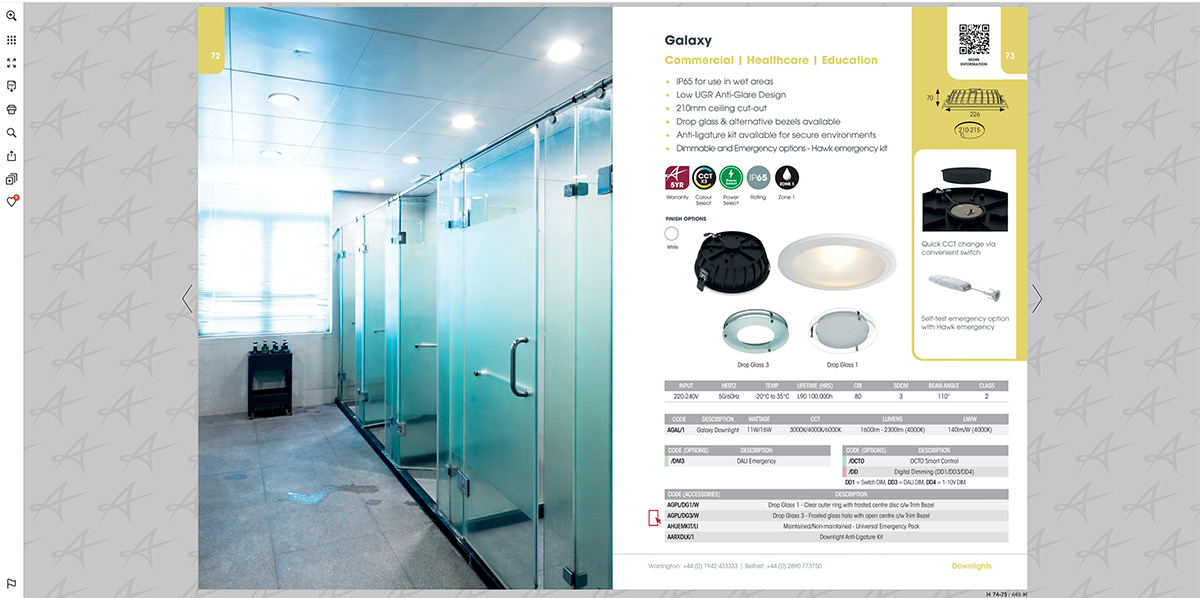
If those details only exist as flattened images inside a PDF, AI systems may miss them or misread them.
| Platform | SEO performance | GEO performance | Best 2026 advantage | Main caution |
| Issuu | 5/5 | 3/5 | Strong domain authority and public discoverability | Less control over AI-ready structuring |
| Calaméo | 4/5 | 3/5 | Fast FR/EU indexing, accessible publishing | GEO value depends heavily on document quality |
| Yumpu | 4/5 | 3/5 | Search-oriented public footprint | Older-style ecosystem |
| FlippingBook | 3/5 | 4/5 | Clean HTML and business delivery | Lower public discovery than kiosks |
| Publitas | 3/5 | 5/5 | Product-feed logic ideal for machine-readable commerce | Premium setup |
| Flipsnack | 3/5 | 4/5 | Good interactive structure and design flexibility | Scale limits on product data operations |
| Heyzine | 3/5 | 3/5 | Lightweight embedded experiences | Smaller authority footprint |
| Publuu | 3/5 | 3/5 | Good usability for SMBs | Less ecosystem weight |
Key editorial takeaway:
A public kiosk often wins for reach, while a commerce or corporate platform often wins for structured extraction.
Every luminaire, driver, or lighting control system should point to its canonical product page.
AI systems extract structured text far better than image-only layouts.
A page with only an embedded viewer may look empty to crawlers and AI agents.
Intro text, summaries, FAQs, and specification highlights on the host page often improve both SEO and GEO.
| Criteria | Issuu | Calaméo |
| Positioning | Social publishing + visual discovery | Professional document publishing |
| Typical strength | Reach and exposure | Value, control, European fit |
| Entry pricing logic | Often higher for advanced brand control | More accessible for SMEs |
| SEO visibility | Excellent via domain authority | Strong, especially in FR/EU |
| Analytics | Engagement-focused | Traffic and business-focused |
| White label | Higher-tier plans | More accessible in premium tiers |
| Best for | International awareness | B2B publishing and controlled communication |
For many lighting manufacturers, Calaméo delivers stronger short-term ROI because it offers a lower barrier to professional publishing.
Issuu can justify its cost when discovery matters and when the catalog is part of a broader visibility strategy.
Choose Issuu if your goal is visibility, international brand discovery, and strong editorial presentation.
Choose Calaméo if your goal is cost-efficient B2B communication, European alignment, and cleaner day-to-day deployment.
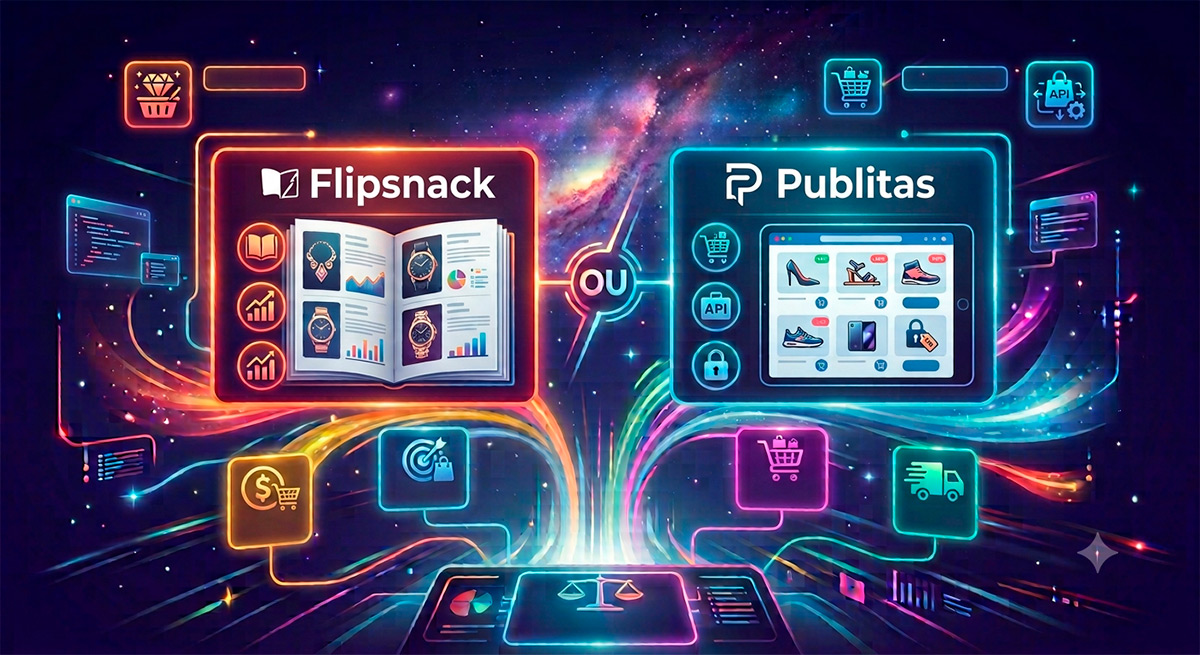
| Criteria | Flipsnack | Publitas |
| Product management | Mostly manual or lighter workflows | Feed-based, scalable |
| Shopping experience | Clickable products, curated selling | Retail-grade overlays and cart logic |
| Design creation | Excellent | More operational than creative |
| Catalog scale | Small to mid-size | Large, dynamic inventories |
| Audience | SMB to mid-market | Enterprise retail and large catalogs |
| Cost profile | More accessible | More premium |
This is the decisive factor.
| Platform | EU/EEA hosting claim or likely setup | GDPR confidence level | Editorial note |
| Calaméo | France-centered | High | Strongest sovereignty signal in this list |
| Publitas | Netherlands / EU cloud footprint | High | Well aligned for enterprise retail in Europe |
| Heyzine | EU-based operation | High | Good option for EU-first deployments |
| Yumpu | Switzerland / Germany context | Medium-High | Switzerland has EU adequacy, but confirm storage details |
| Publuu | EU company, verify cloud region | Medium | Confirm exact AWS region and subprocessors |
| FlippingBook | EU company, plus self-hosting options depending on product | High | Strong control option for corporate needs |
| Flipsnack | Compliance-ready, but verify residency setup | Medium | Confirm regional hosting and DPA terms |
| Issuu | Not exclusively EU-hosted | Medium | GDPR compliance via legal safeguards, not full EU residency |
| Joomag | Verify current infrastructure | Medium-Low | Requires due diligence |
| FlipHTML5 | Non-EU governance concerns | Low | Sensitive deployments should be cautious |
| AnyFlip | Non-EU governance concerns | Low | Same caution applies |
Not fully, but it uses legal safeguards
Across its full-service stack, Issuu does not appear to guarantee exclusive data hosting in Europe. Its GDPR posture is better understood as compliance through governance and transfer mechanisms, not pure European data residency.
That means:
Bottom line:
Issuu can be compliant for many publishing uses, but it is not the strongest choice if strict European data residency is a non-negotiable procurement requirement.
For lighting brands in 2026, there is no universal winner.
The bigger strategic lesson is this: a flipbook is no longer just a format. It is a searchable, quotable, data-bearing publishing asset.
In lighting, where products are technical and buying journeys are long, the platforms that win will be those that connect visual quality with structured information, compliance, and machine readability.
First, I have professional experience with flipbook platforms, particularly Issuu, Calaméo, and Yumpu. I use them to quickly search for information, find quotes, and understand a company’s online presence. This experience extends to lighting companies, media organizations, and institutional sources.
Second, I have a business account on Issuu: Light ZOOM Lumière | LZL Services. Because I post flipbooks a few times a year, this account allows me to understand from the inside how the platform works, what it offers, and how to access concrete statistics on my publications, including the number of views, unique users, reading time, and click-through rates.
Finally, to take a broader view and assess how lighting manufacturers use these platforms—as well as the questions marketing teams and specifiers may have—I conducted an analysis for this article. For this purpose, I chose to use the research tools Gemini, ChatGPT, and Claude.
This analysis is based on:
Publication counts, infrastructure details, and exact hosting architecture can change. Where vendors do not publish auditable figures, values should be treated as orders of magnitude, not certified totals. For regulated deployments, IT teams should always confirm:
Yes. But their value now depends on search visibility, AI extractability, and integration with product pages.
For public reach, Issuu remains one of the strongest.
For practical B2B deployment in Europe, Calaméo is highly competitive.
For structured product content and AI-friendly commerce logic, Publitas is among the strongest.
Among the platforms listed, Calaméo, Publitas, and FlippingBook generally offer the strongest positioning for EU-conscious deployments, subject to contract review.
Embedding a flipbook in an iFrame without surrounding text, metadata, product links, or a crawlable summary page.
© Light ZOOM Lumière, tous droits réservés.