Best Flipbook Platforms for Lighting Brands in 2026

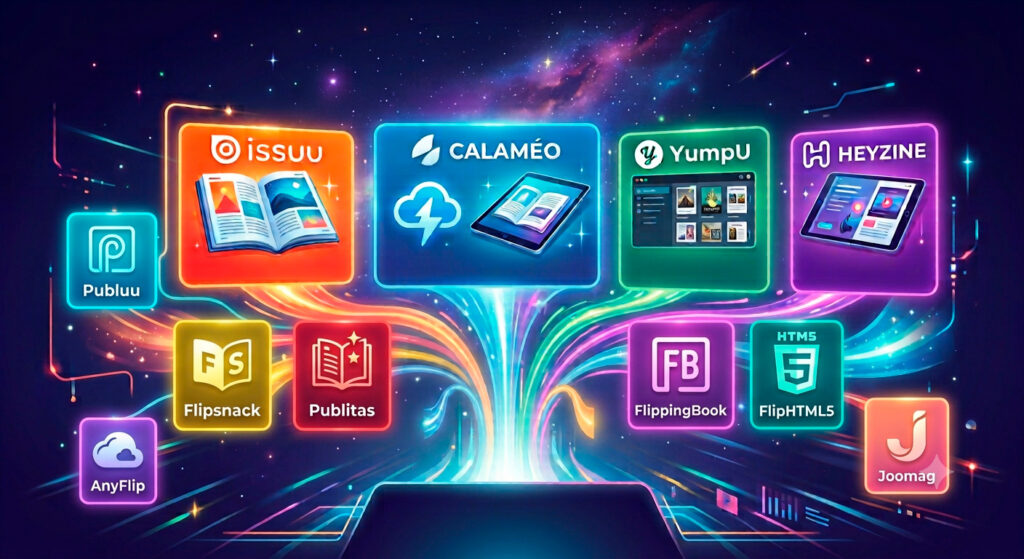
Flipbook - Image créée par intelligence artificielle via Gemini. Toutes les marques, logos et plateformes de flipbooks mentionnés (Issuu, Calaméo, Yumpu, etc.) sont la propriété exclusive de leurs éditeurs respectifs et sont utilisés ici à but purement illustratif.

In 2026, lighting brands need more than a sleek flipbook: they need platforms that boost SEO, feed AI answers, and keep data under control.

— VINCENT LAGANIER —

July 1, 2026

The top flipbook platforms for lighting brands in 2026 are Issuu, Calaméo, Flipsnack, Publitas, and FlippingBook. Each serves a different goal: Issuu for visibility, Calaméo for European B2B value, Flipsnack for design, Publitas for scalable commerce, and FlippingBook for secure corporate sharing.

Flipbooks still matter in lighting. But in 2026, visibility depends on SEO, GEO, and data control. Issuu, Calaméo, Flipsnack, Publitas: which platform really performs for professional marketers? A beautiful catalog is no longer enough. The winning flipbook must also be crawlable, quotable, and compliant.

Content

Which online flipbook platforms matter most for lighting brands?

Lighting marketing teams are under pressure from two directions at once. Sales teams still need visually rich digital catalogs, while IT teams now need those same documents to perform in both Google search and AI answer engines such as Perplexity, Gemini, and SearchGPT.

That is why flipbook platforms can no longer be judged on design alone. In professional lighting, the right platform must support:

  • brochures and long product catalogs,
  • project references and case studies,
  • links to product pages,
  • measurable engagement,
  • compliant embedding,
  • extractable text and metadata.

The market now splits into four clear families: public kiosks, pure flipbook generators, e-commerce catalog tools, and corporate publishing platforms.

What are the main flipbook platforms for lighting brands?

Strengths, weaknesses, and typical fit

The table below synthesizes the major flipbook platforms most relevant to lighting marketing teams.

Platform Origin Core positioning Strengths Weaknesses Best fit for lighting
Issuu US / EU governance Public kiosk + flipbook Huge domain authority, discovery, strong brand exposure Public-first model, premium cost, US-linked data transfers Brands seeking visibility and international reach
Calaméo France Document sharing + flipbook Strong French/EU fit, good value, familiar in B2B publishing Less global consumer reach than Issuu European manufacturers, distributors, trade media
Yumpu Switzerland Magazine + SEO-focused publishing Public discoverability, search-friendly footprint Less modern brand perception, uneven use in lighting today Legacy digital magazines, searchable public catalogs
Heyzine Spain HTML5 flipbook generator Clean UX, light interface, simple embedding Smaller ecosystem, less discovery power Design-led embedded flipbooks on owned sites
Publuu Poland Interactive flipbook Clean interface, business-friendly presentation Smaller installed base, less authority SMB catalogs, sales presentations
Flipsnack US / Romania roots Design studio + shoppable flipbook Strong creation tools, templates, interactive design Product management less scalable than retail-grade systems Mid-sized product catalogs with visual storytelling
Publitas Netherlands Retail catalog commerce Product feed integration, shopping workflows, enterprise retail logic Higher cost, more complex onboarding Large shoppable catalogs with product sync
FlippingBook Malta Corporate publishing Clean HTML, private sharing options, strong business use Less “marketplace visibility” Sales enablement, secure B2B publishing
FlipHTML5 Brazil / Hong Kong group Publishing + ebook sales Broad feature set, monetization tools Data governance concerns for strict EU buyers Low-cost experimentation, non-sensitive public content
Joomag US Content marketing + CRM Marketing automation angle Broader than flipbooks; not lighting-specific Content-led campaigns and gated assets
AnyFlip Hong Kong Fast PDF conversion Speed, ease of use Governance and compliance concerns Low-stakes, quick-turn public documents

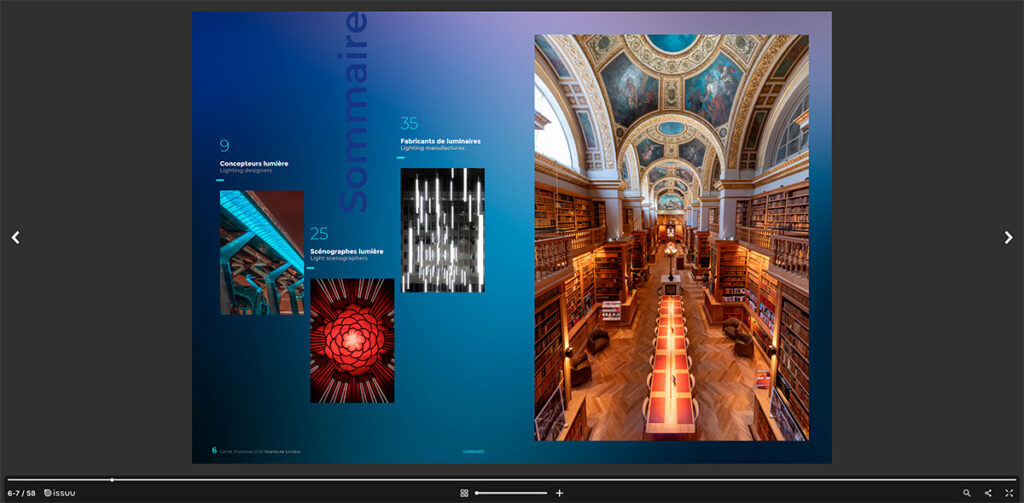
Issuu flipbook lighting directory - Talents de lumiere, content table - Light ZOOM Lumiere - Nov 24, 2025 - Content page - Web capture © LZL Services, Issuu

Who leads in interactivity and design for the lighting industry?

The visual leaders are not always the search leaders

In lighting, design matters. Product families, beam spreads, optics, finishes, and project imagery all rely on layout quality. On this front, Flipsnack, Issuu, and Heyzine stand out.

  • Flipsnack is the most design-oriented of the existing plateforms. It behaves like a lightweight publishing studio, making it attractive for marketing teams that want to build a sales-ready catalog without depending entirely on Adobe workflows.
  • Issuu remains highly polished and reader-friendly, especially for public-facing branded content and editorial-style lookbooks.
  • Heyzine is efficient and visually clean, especially when the goal is to embed a branded catalog directly into a website without a noisy marketplace environment.

The trade-off is clear: the most elegant reader experience does not automatically produce the best indexability, quote extraction, or product-level discoverability.

What is the best budget or free alternatives?

Lower cost often means lower visibility control.

For micro-businesses

For cost-sensitive teams, especially small manufacturers, lighting design agencies, and distributors, the strongest budget options are usually:

  • Calaméo
  • Heyzine
  • Publuu
  • Yumpu
  • selected free tiers from Issuu or Flipsnack

But there is a catch. “Free” often means one or more of the following:

  • third-party branding,
  • public indexing by default,
  • limited analytics,
  • no white-label embedding,
  • weaker privacy controls,
  • reduced support.

For SMEs

For lighting firms with long buying cycles and premium brand positioning, cheap publishing can quickly become expensive if it introduces competitor ads, poor analytics, or weak conversion paths.

The strongest options are usually:

  • Issuu
  • Flipsnack

Which platforms are specialized for e-commerce or corporate publishing?

Retail catalogs and controlled B2B sharing are different jobs. Two categories deserve separate treatment.

For e-commerce catalogs

  • Publitas is built for retail logic, recurring offers, and product feed synchronization.
  • Flipsnack supports commerce features too, but is better suited to curated product selections than massive live inventories.

For corporate publishing

  • FlippingBook is one of the strongest options when a lighting brand needs controlled sharing, private documentation, clean presentation, and a business-oriented environment.
  • Calaméo can also work well for formal publishing in Europe, especially when public discoverability remains useful.

This distinction matters because a specifier catalog, a distributor price list, and a shoppable online retail brochure do not share the same requirements.

What are real use cases in professional lighting?

The market shows both adoption and abandonment

According to my lighting market analysis, Issuu, Calaméo, and Yumpu have been widely used in lighting and related trade media. Among the visible examples:

  • Artemide, Aurora Lighting, Lumenpulse, Targetti, Thorn Lighting on Issuu,
  • Aric and Résistex on Calaméo,
  • Etap Lighting, iGuzzini, Molto Luce, Regent Lighting, XAL on Yumpu,
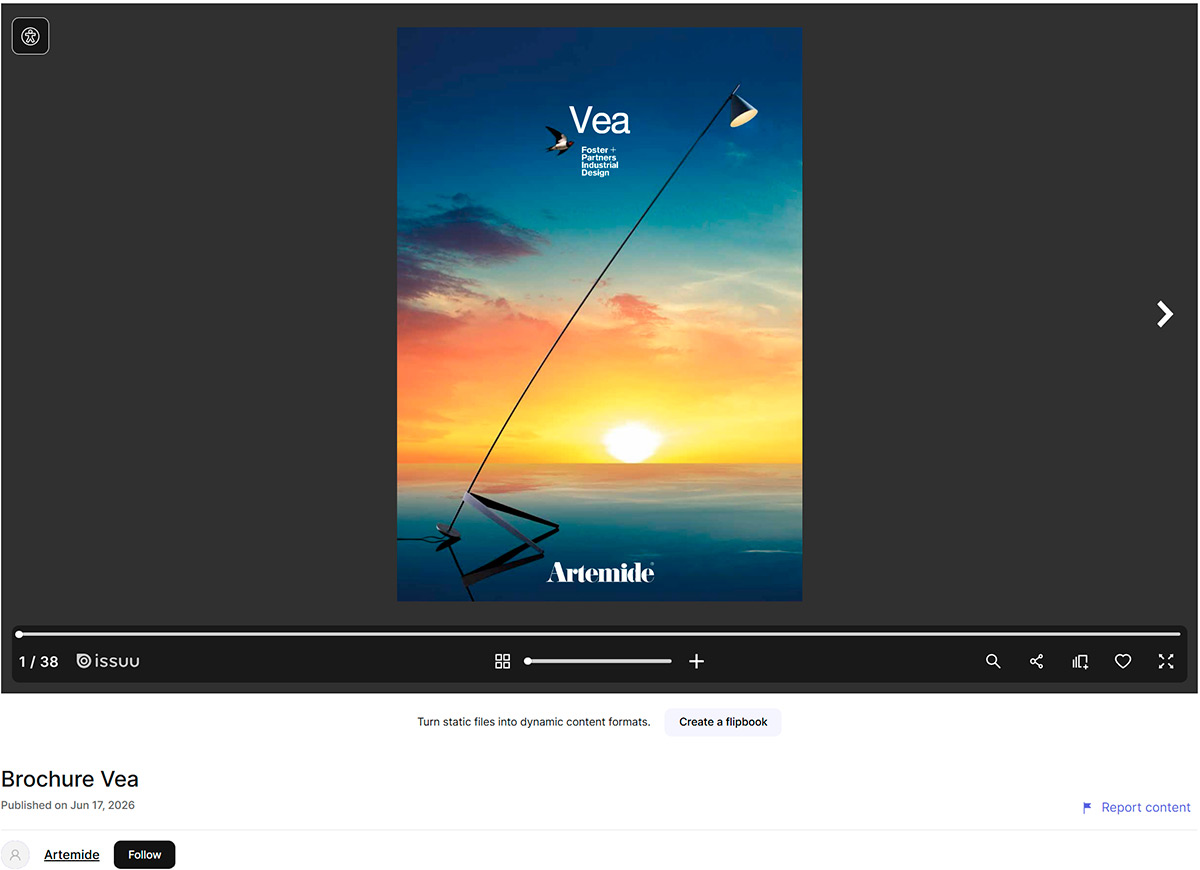
Issuu flipbook lighting product - Brochure Vea - Artemide - June 17, 2026 - Cover - Web capture © Artemide, Issuu

Media players’ choice depends on their size and scope such as:

  • arc Magazine, Light ZOOM Lumière on Issuu,
  • Lumières 3e on Yumpu,
  • Revue de l’éclairage LUX on Calaméo.
Flipbook media lighting - Lumières 3e
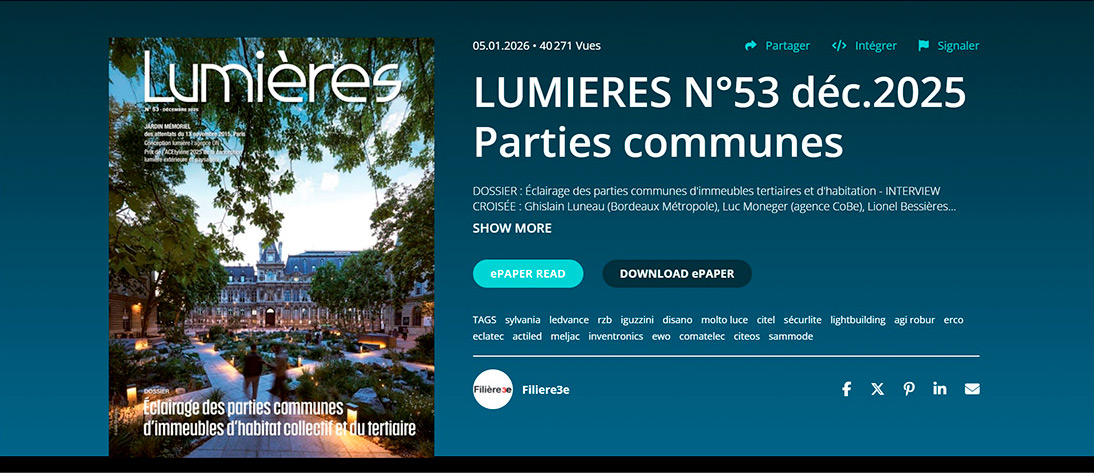
Yumpu flipbook media lighting - Lumières 3e - n°53 décembre 2025 - Parties communes - Couverture - Web capture © Filiere 3e, Yumpu

But also, a shift away from other options

A striking pattern emerges: some brands used public kiosks heavily in the 2012–2016 period, then reduced or abandoned them. That likely reflects a shift toward:

  • self-hosted PDFs,
  • embedded proprietary viewers,
  • DAM/PIM-connected content hubs, DAM for Digital Asset Management), PIM for Product Information Management,
  • concerns around brand control, analytics, and consent.

This is an editorially important point: adoption alone does not prove long-term effectiveness.

For lighting brands,

  • the right question is not “Which tool was popular?”
  • but “Which tool still supports discoverability, traceability, and sales enablement today?”
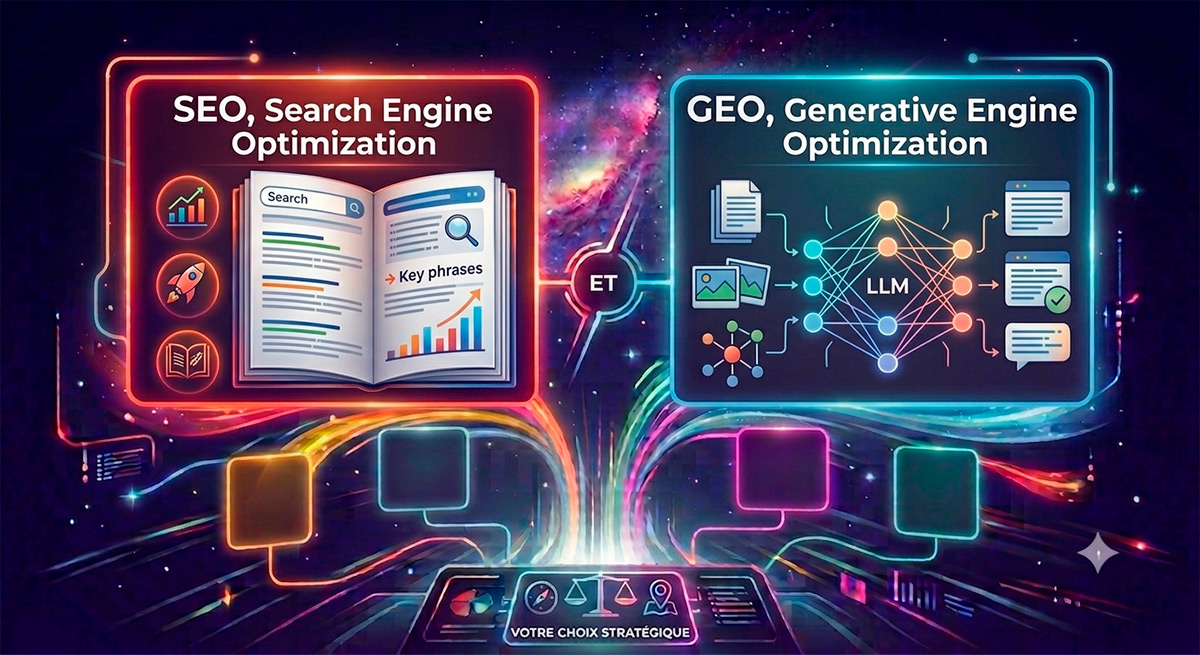
Flipbook SEO and GEO - Image créée par IA via Gemini - Toutes les marques, logos et plateformes mentionnés sont utilisés ici à but purement illustratif

How do flipbooks support SEO and GEO for companies?

In 2026, flipbooks play a role in two parallel visibility systems. SEO is about indexing. GEO is about being quoted by AI. What’s the real situation?

SEO: Search Engine Optimization

Traditional SEO depends on:

  • text extraction from PDFs,
  • crawlable HTML layers,
  • metadata fields,
  • internal and outbound links,
  • page performance and indexing clarity.

A raw PDF can rank, but usually with poor context and limited extraction.

A well-built flipbook platform can turn a document into a more machine-readable asset.

GEO: Generative Engine Optimization

GEO is different. AI systems are not just ranking pages; they are assembling answers. That means your content must be:

  • semantically clear,
  • text-accessible,
  • structured by products, specs, brands, and references,
  • connected to authoritative sources,
  • easy to quote without ambiguity.

For lighting companies, this matters especially for:

  • lumens,
  • efficacy,
  • CCT,
  • CRI,
  • IP/IK ratings,
  • optical systems,
  • control protocols,
  • certifications,
  • application domains.

If those details only exist as flattened images inside a PDF, AI systems may miss them or misread them.

SEO vs GEO by platform

Comparative snapshot for 2026

Platform SEO performance GEO performance Best 2026 advantage Main caution
Issuu 5/5 3/5 Strong domain authority and public discoverability Less control over AI-ready structuring
Calaméo 4/5 3/5 Fast FR/EU indexing, accessible publishing GEO value depends heavily on document quality
Yumpu 4/5 3/5 Search-oriented public footprint Older-style ecosystem
FlippingBook 3/5 4/5 Clean HTML and business delivery Lower public discovery than kiosks
Publitas 3/5 5/5 Product-feed logic ideal for machine-readable commerce Premium setup
Flipsnack 3/5 4/5 Good interactive structure and design flexibility Scale limits on product data operations
Heyzine 3/5 3/5 Lightweight embedded experiences Smaller authority footprint
Publuu 3/5 3/5 Good usability for SMBs Less ecosystem weight

Key editorial takeaway:

A public kiosk often wins for reach, while a commerce or corporate platform often wins for structured extraction.

Comment les marques d'éclairage peuvent-elles maximiser leur visibilité en 2026 ?

How can lighting brands maximize visibility in 2026?

Five practical actions

  1. Use product-level links

Every luminaire, driver, or lighting control system should point to its canonical product page.

  1. Write machine-readable filenames and titles
  • Avoid:  catalog_v3_final2.pdf.
  • Use descriptive titles like: architectural-lighting-catalog-2026-brand-name.pdf.
  1. Keep text live, not flattened into an image

AI systems extract structured text far better than image-only layouts.

  1. Do not rely on iFrame embeds alone

A page with only an embedded viewer may look empty to crawlers and AI agents.

  1. Add surrounding editorial context

Intro text, summaries, FAQs, and specification highlights on the host page often improve both SEO and GEO.

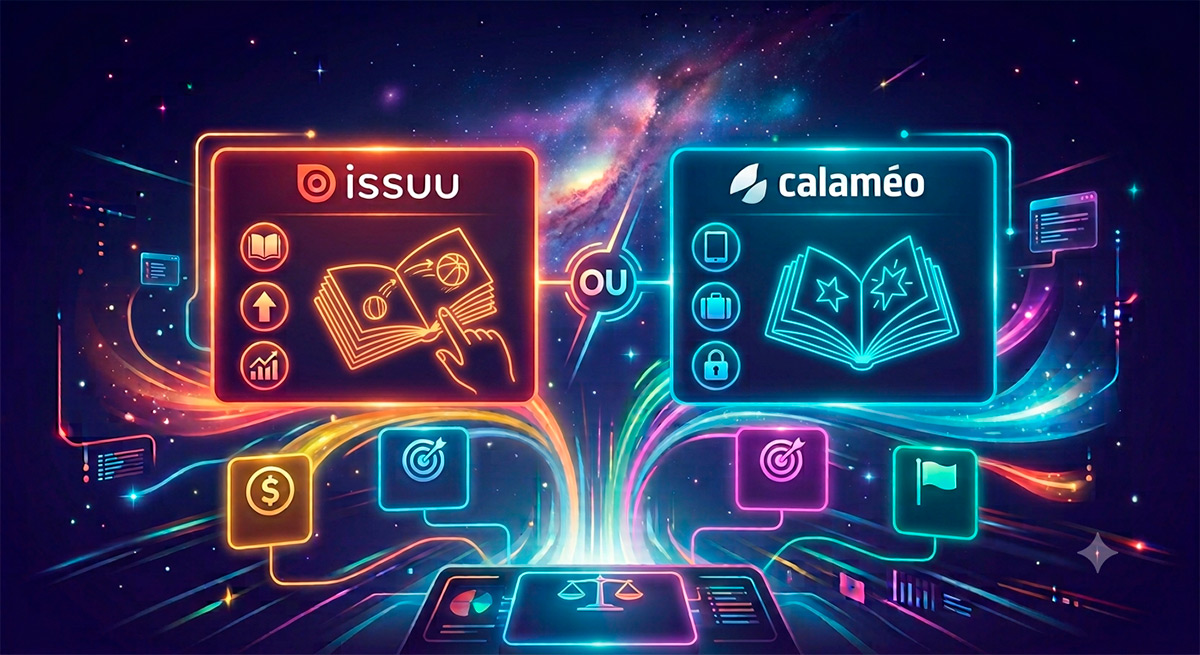
Flipbook - Image créée par IA via Gemini - Toutes lees marques, logos et plateformes mentionnés, Issuu et Calaméo, sont la propriété exclusive de leurs éditeurs respectifs et utilisés à but purement illustratif

Issuu or Calaméo: which is better for your communication strategy?

Comparative table

CriteriaIssuuCalaméo
PositioningSocial publishing + visual discoveryProfessional document publishing
Typical strengthReach and exposureValue, control, European fit
Entry pricing logicOften higher for advanced brand controlMore accessible for SMEs
SEO visibilityExcellent via domain authorityStrong, especially in FR/EU
AnalyticsEngagement-focusedTraffic and business-focused
White labelHigher-tier plansMore accessible in premium tiers
Best forInternational awarenessB2B publishing and controlled communication
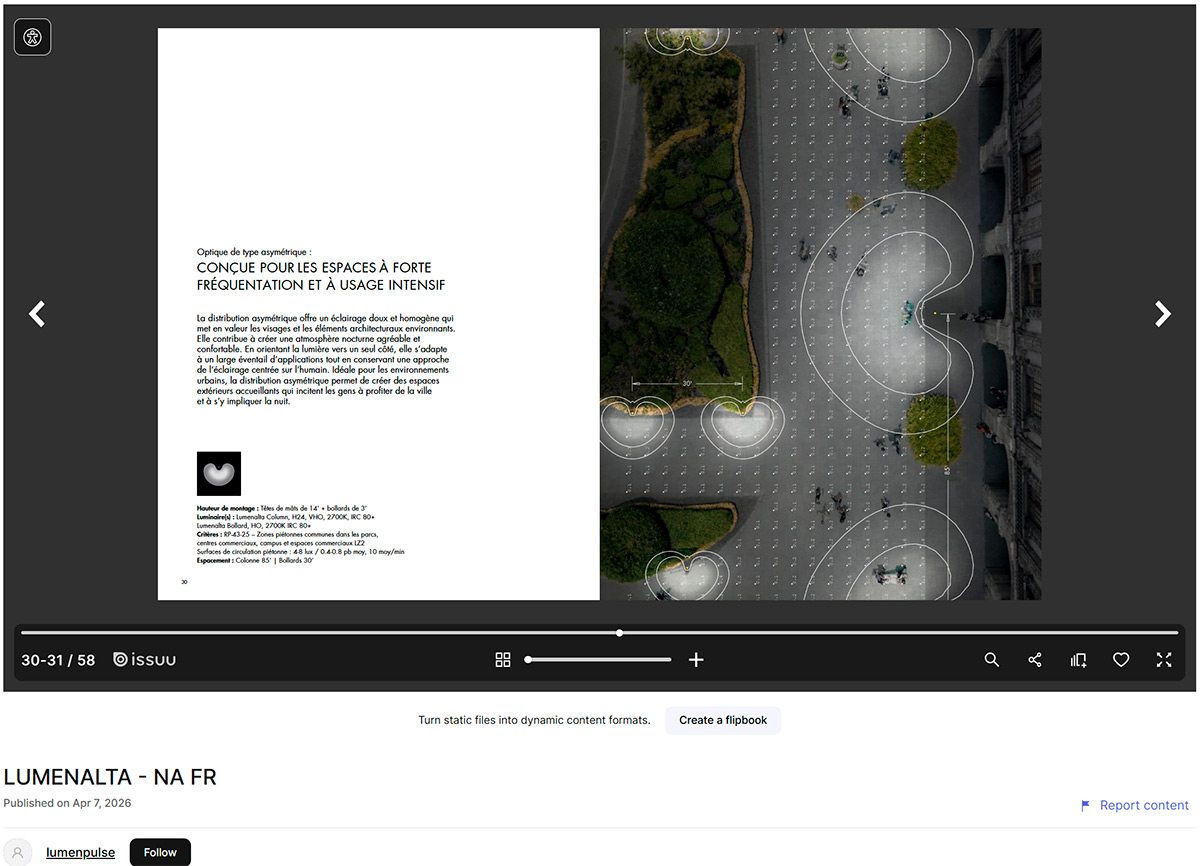
Issuu flipbook lighting brochure sample - Lumenpulse, Lumenalta, NA FR - Inside page - Web capture © Issuu

Cost and ROI analysis

For many lighting manufacturers, Calaméo delivers stronger short-term ROI because it offers a lower barrier to professional publishing.

Issuu can justify its cost when discovery matters and when the catalog is part of a broader visibility strategy.

SEO and Google visibility

  • Issuu usually wins on raw domain strength.
  • Calaméo often wins on practicality, especially for French-speaking and European publishing teams.

Reading analytics

  • Issuu is useful for reading behavior and exposure.
  • Calaméo tends to be more operationally useful for traffic-source analysis.
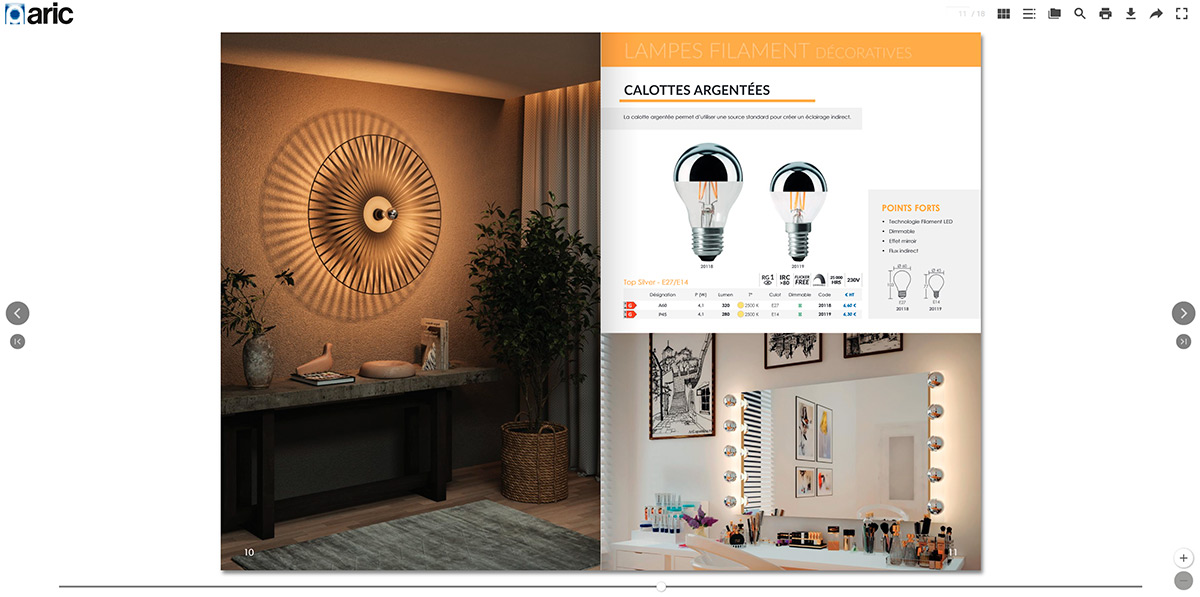
Calaméo flipbook LED bulb brochure sample - Aric éclairage - Brochure Lampes Vintage 2026 - Inside page - Web capture © Calaméo

Expert recommendation

Choose Issuu if your goal is visibility, international brand discovery, and strong editorial presentation.

Choose Calaméo if your goal is cost-efficient B2B communication, European alignment, and cleaner day-to-day deployment.

Flipbook - Image créée par IA via Gemini - Toutes les marques, logos et plateformes, Flipsnack ou Publitas, mentionnés sont la propriété exclusive de leurs éditeurs respectifs utilisés à but purement illustratif

Flipsnack or Publitas for a shoppable product catalog?

Comparative table

Criteria Flipsnack Publitas
Product management Mostly manual or lighter workflows Feed-based, scalable
Shopping experience Clickable products, curated selling Retail-grade overlays and cart logic
Design creation Excellent More operational than creative
Catalog scale Small to mid-size Large, dynamic inventories
Audience SMB to mid-market Enterprise retail and large catalogs
Cost profile More accessible More premium
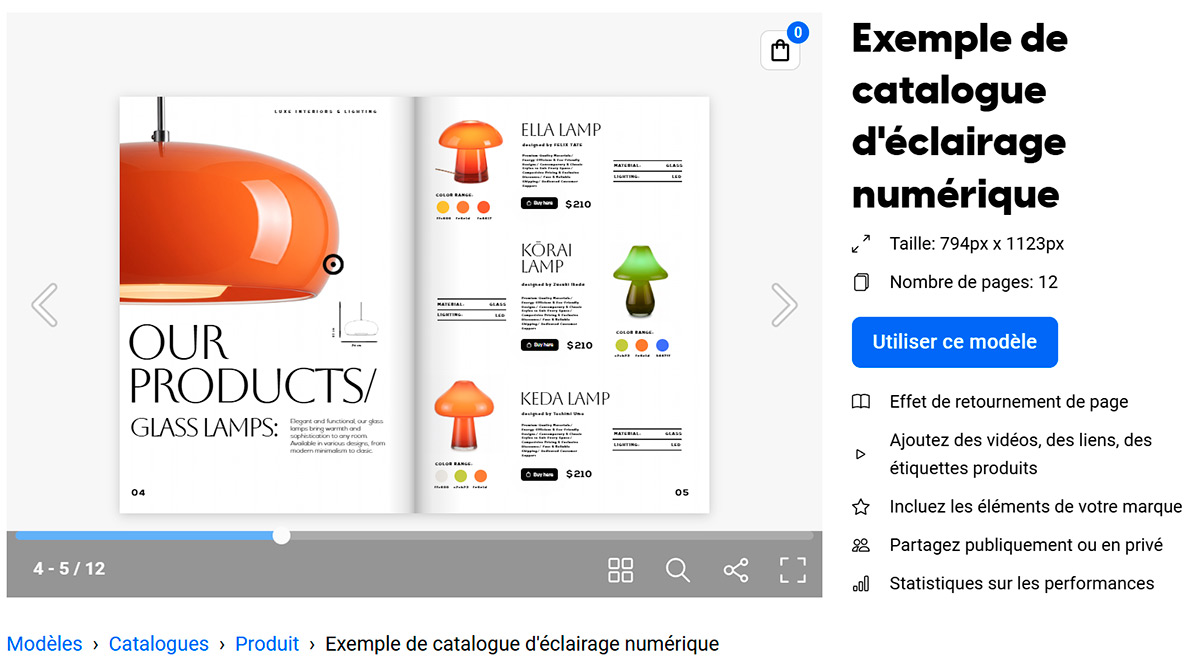
Flipsnack flipbook lighting brochure sample - Flipsnack - Inside page - Web capture © Flipsnack

Heart of the difference: product management

This is the decisive factor.

  • Flipsnack works best when product volumes are manageable and campaigns are highly visual.
  • Publitas becomes the stronger choice when data changes constantly and product feeds already exist.

Summary recommendation

  • Choose Flipsnack for curated, design-led product storytelling.
  • Choose Publitas for synchronized commerce catalogs at scale.
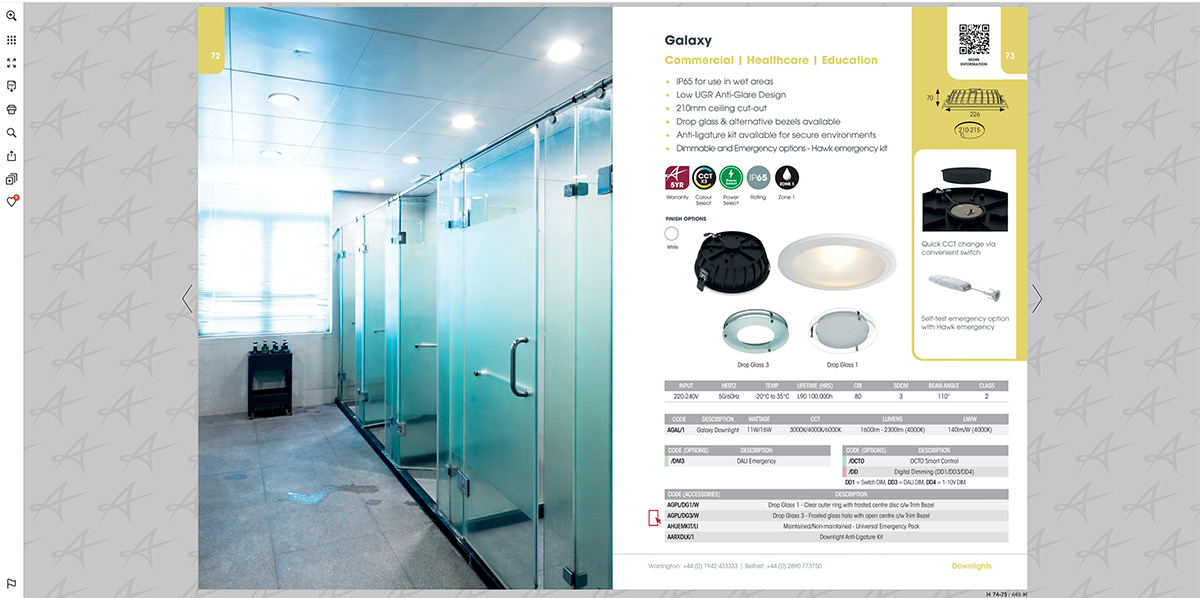
Publitas flipbook lighting catalogue sample - Ansell Lighting - Inside page - Web capture © Ansell Lighting with Publitas

Which flipbook platforms offer European data hosting for GDPR compliance?

Summary table

PlatformEU/EEA hosting claim or likely setupGDPR confidence levelEditorial note
CalaméoFrance-centeredHighStrongest sovereignty signal in this list
PublitasNetherlands / EU cloud footprintHighWell aligned for enterprise retail in Europe
HeyzineEU-based operationHighGood option for EU-first deployments
YumpuSwitzerland / Germany contextMedium-HighSwitzerland has EU adequacy, but confirm storage details
PubluuEU company, verify cloud regionMediumConfirm exact AWS region and subprocessors
FlippingBookEU company, plus self-hosting options depending on productHighStrong control option for corporate needs
FlipsnackCompliance-ready, but verify residency setupMediumConfirm regional hosting and DPA terms
IssuuNot exclusively EU-hostedMediumGDPR compliance via legal safeguards, not full EU residency
JoomagVerify current infrastructureMedium-LowRequires due diligence
FlipHTML5Non-EU governance concernsLowSensitive deployments should be cautious
AnyFlipNon-EU governance concernsLowSame caution applies

Does Issuu guarantee data hosting in Europe for GDPR compliance?

Short answer

Not fully, but it uses legal safeguards

Understanding the issues

Across its full-service stack, Issuu does not appear to guarantee exclusive data hosting in Europe. Its GDPR posture is better understood as compliance through governance and transfer mechanisms, not pure European data residency.

That means:

  • European legal oversight exists through EU-linked corporate structures,
  • transfers may still involve US infrastructure,
  • compliance depends on DPA terms, standard contractual clauses, and current transatlantic transfer frameworks,
  • your own setup still matters, especially for embeds, cookies, and public indexing.

What marketing teams should do before using Issuu

  1. Review of the latest Data Processing Agreement.
  2. Verify current subprocessors and hosting regions.
  3. Check whether your document is public, unlisted, or private.
  4. Manage embeds through a CMP before loading third-party scripts.
  5. Avoid using free/public plans for sensitive commercial or personal data.

Bottom line:

Issuu can be compliant for many publishing uses, but it is not the strongest choice if strict European data residency is a non-negotiable procurement requirement.

Reportage photo éclairage public – Promenade Le Paquier, Annecy, France © Vincent Laganier, LZL Services

Final expert recommendation for lighting marketing leaders

The best platform depends on the job to be done

For lighting brands in 2026, there is no universal winner.

  • Choose Issuu for public reach, brand exposure, and discoverability.
  • Choose Calaméo for European B2B publishing, affordability, and operational clarity.
  • Choose Flipsnack for highly visual, curated product storytelling.
  • Choose Publitas for scalable shoppable catalogs and feed-driven commerce.
  • Choose FlippingBook for controlled corporate distribution and stronger governance.

The bigger strategic lesson is this: a flipbook is no longer just a format. It is a searchable, quotable, data-bearing publishing asset.

In lighting, where products are technical and buying journeys are long, the platforms that win will be those that connect visual quality with structured information, compliance, and machine readability.

Method, scope and transparency

Method applied

First, I have professional experience with flipbook platforms, particularly Issuu, Calaméo, and Yumpu. I use them to quickly search for information, find quotes, and understand a company’s online presence. This experience extends to lighting companies, media organizations, and institutional sources.

Second, I have a business account on Issuu: Light ZOOM Lumière | LZL Services. Because I post flipbooks a few times a year, this account allows me to understand from the inside how the platform works, what it offers, and how to access concrete statistics on my publications, including the number of views, unique users, reading time, and click-through rates.

Finally, to take a broader view and assess how lighting manufacturers use these platforms—as well as the questions marketing teams and specifiers may have—I conducted an analysis for this article. For this purpose, I chose to use the research tools Gemini, ChatGPT, and Claude.

Sources and limits

This analysis is based on:

  • official platforms positioning and public documentation,
  • the market inventory supplied by Gemini and Claude IA,
  • observed use cases in professional lighting publishing,
  • public lighting brand channels listed for Issuu, Calaméo, and Yumpu,
  • general SEO/GEO publishing principles valid as of 2026.

Important transparency notes

Publication counts, infrastructure details, and exact hosting architecture can change. Where vendors do not publish auditable figures, values should be treated as orders of magnitude, not certified totals. For regulated deployments, IT teams should always confirm:

  1. current DPA terms,
  2. data residency,
  3. subprocessor list,
  4. cookie behavior,
  5. public/private indexing settings.

FAQ

Are flipbooks still useful for lighting brands in 2026?

Yes. But their value now depends on search visibility, AI extractability, and integration with product pages.

Which platform is best for SEO?

For public reach, Issuu remains one of the strongest.

For practical B2B deployment in Europe, Calaméo is highly competitive.

Which platform is best for GEO?

For structured product content and AI-friendly commerce logic, Publitas is among the strongest.

Which platform is safest for GDPR-sensitive European teams?

Among the platforms listed, Calaméo, Publitas, and FlippingBook generally offer the strongest positioning for EU-conscious deployments, subject to contract review.

What is the biggest mistake brands make with flipbooks?

Embedding a flipbook in an iFrame without surrounding text, metadata, product links, or a crawlable summary page.